Our social:

Latest Post

Showing posts with label Review. Show all posts

Monday, August 12, 2013

HTC One Smart phone complete Review with Video 2013

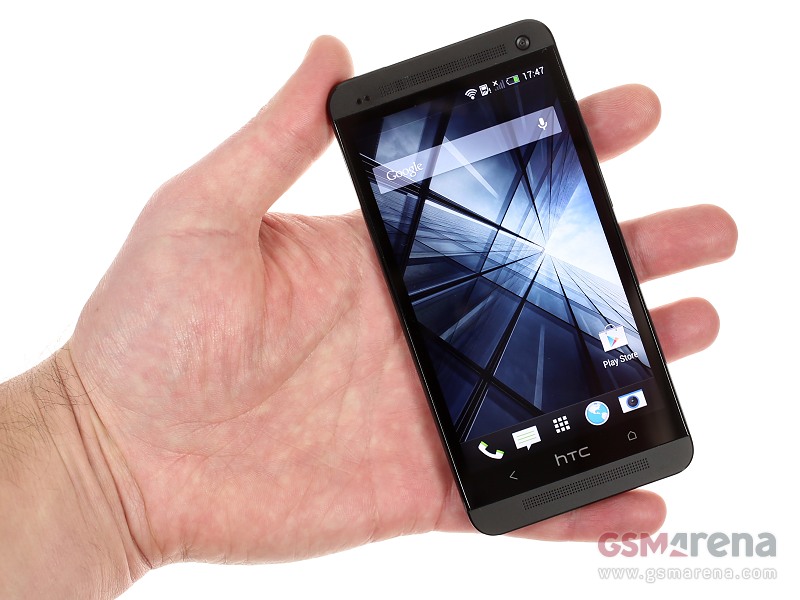
HTC One Mobile Review 

The HTC One strides mightily ahead of the rest of the Taiwanese phone maker's range, confidently surveying its foes on the smart phone battlefield. With a 4.7-inch Full HD screen, a blisteringly powerful quad-core chip, a metal chassis and the latest version of its Sense interface, it's not a misplaced sense of confidence.

Those are some impressive specs, but with all the top-end phones packing similarly potent components, is it going to be enough to keep HTC's head above the water? With Samsung's Galaxy S4 imminent, it's likely to have a fight on its hands.

The One was due to go on sale in the next couple of weeks, but HTC has already confirmed it's having supply issues, so we may have to wait a while longer. It also hasn't officially named its price yet, but we're strongly expecting it to be around the £500 mark
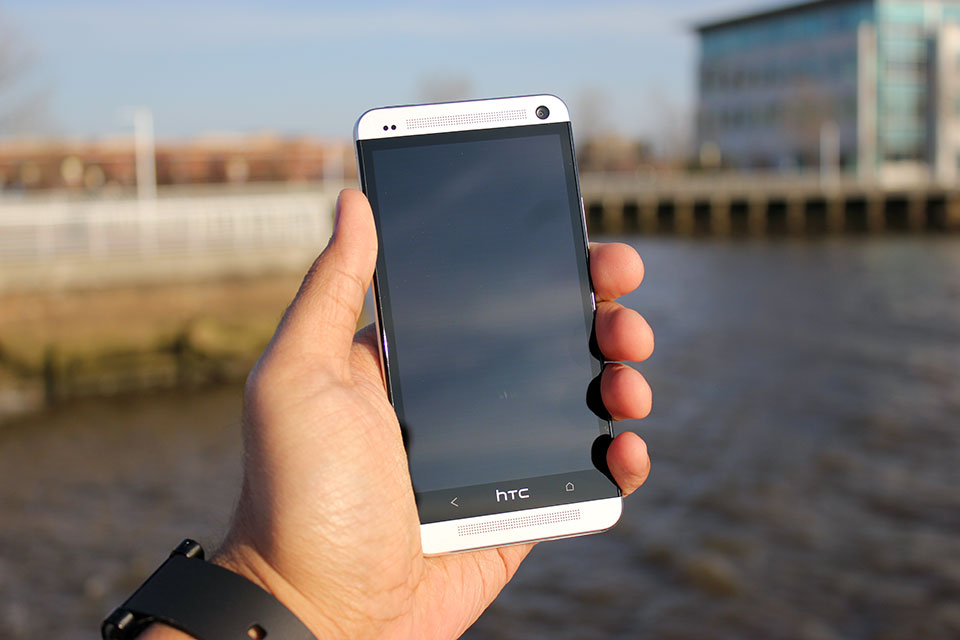


At the speed smartphones are evolving, a bad year can cause all sorts of trouble and HTC had to learn it the hard way. Fortunately, the financial trouble seems to have had no impact on the company's ability to produce excellent smartphones, as the HTC One is here to prove.
Arguably one of the most exciting pieces of smartphone design in recent times, the HTC One is also properly powered and flaunts a screen that should please even the most demanding eyes. It also brings an overdue redesign of the Sense UI and a new camera that takes a completely new approach to mobile photography.

HTC One back

Key features


  • Quad-band GSM/GPRS/EDGE support; 3G with HSPA; LTE
  • 4.7" 16M-color 1080p Super LCD3 capacitive touchscreen with 469ppi pixel density
  • Android OS v4.1.2 Jelly Bean with Sense UI 5.0
  • Quad-core 1.7 GHz Krait 300 CPU, 2 GB RAM, Adreno 320 GPU; Qualcomm Snapdragon 600 chipset
  • 4 MP autofocus "UltraPixel" camera with 1/3" sensor size, 2µm pixel size; LED flash
  • 1080p video recording @ 30fps with HDR mode, continuous autofocus and stereo sound
  • HTC Zoe
  • 2.1 MP front-facing camera, 1080p video recording
  • Wi-Fi a/b/g/n, Wi-Fi Direct and DLNA; Wireless TV out
  • GPS with A-GPS, GLONASS
  • 32/64GB of built-in storage
  • MHL-enabled microUSB port
  • Bluetooth v4.0
  • NFC
  • Standard 3.5 mm audio jack
  • Accelerometer and proximity sensor
  • Active noise cancellation with dedicated mic
  • Aluminum unibody
  • Front-mounted stereo speakers with BoomSound tech
  • Class-leading audio output

Close window


Main disadvantages


  • 4MP camera has disappointing performance in good lighting conditions
  • Non-expandable storage
  • Awkwardly-placed and uncomfortable power button
  • Sense UI still lacks connectivity toggles in notification area
  • Non user-replaceable battery
  • Poor video and audio codec support out of box

The One is a tempting package indeed and even though it will take HTC a while to get out of the slump, this is certainly a confident step in the right direction. With proven performers in both the computing and screen departments, it's only the low camera resolution that will potentially raise doubt. HTC say the extra-large "ultrapixels" are worth the sacrifice though, and we are as keen as you are to find out if that


HTC ONE Video

Tuesday, August 6, 2013

Motorola "Moto X" Mobile Complete Review with Video 2013


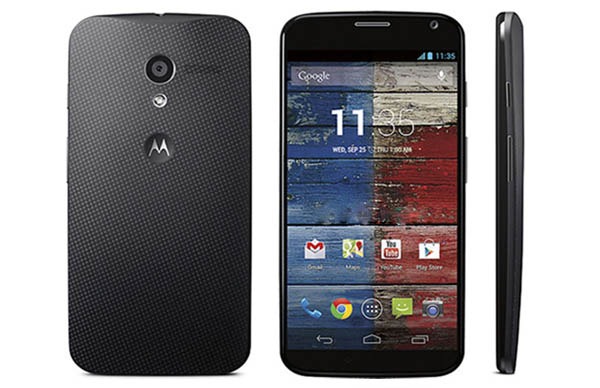
The good: The Motorola Moto X squeezes a speedy camera and futuristic voice command capabilities into a well-crafted design that hits the sweet spot between screen size and comfort. The phone has great battery life and is available in an endless variety of customized designs.

The bad: With no expandable storage, space could get tight, especially on the 16GB base model. The screen isn't as big and sharp as those on some competing handsets.

The bottom line: While in screen quality and storage capacity it lags behind rival superphones, the Moto X's superbly compact and comfortable design, whiz-bang voice controls, and long battery life make it a worthy Android contender.
To put it bluntly, Motorola has never created a true flagship ubersmartphone on the level of the Samsung Galaxy S4 and HTC One. But the company aims to change that with the Moto X. The $199 smartphone is Motorola's first handset fully developed under the auspices of its corporate parent (and Android godfather), Google. And it'll be available on most major U.S. carriers when it hits stores later in August.

Make no mistake the Moto X isn't a fire-breathing mobile monster that will blow away the competitors in a spec sheet battle -- the screen isn't cutting-edge, and there's no expandable storage. Storage is the phone's biggest weakness: with just 16GB in the $199 model (the 32GB Moto costs $50 more) and no SD card slot for adding more, it's got an uphill battle on the value scale versus the HTC One (32GB by default) and Galaxy S4 (expansion slot onboard).

Storage qualms notwithstanding, though, the X is a nimble, compact handset with advanced capabilities that targets ordinary phone users. The Moto X boasts many of the same features that Motorola's new trio of Verizon Droids flaunt -- especially always-on Google Now voice control -- plus a few slick extras. Better yet, they're all crammed into a highly customizable design built for maximum comfort. This is a scrappy smartphone with enough going for it to bring the fight to the big boys.


A more thoughtful design
Under the thumb of Verizon's macho Droid brand for years, Motorola's smartphone industrial design has been well, industrial. Ever since the original Droid device hit the scene, Motorola has cranked out flagship machines sporting sharp angles, Kevlar coatings, and hard metallic trims.

To be fair, that's not a bad thing; those devices have been very popular. Plus the company's upcoming Droid mobile machines are less stark than their predecessors, featuring smoother curves and no metallic highlights. All three devices, though, the Droid Mini, the Droid Ultra, and the Droid Maxx, keep the traditionally aggressive red or sober black color scheme that's in keeping with Verizon's intimidating robotic franchise.


The Moto X, however, pushes this history aside and attempts to turn an all-new page and gain broader appeal. Instead of harshly chiseled lines, the Moto X is sculpted with softly rounded curves. The phone's back is gently rounded for a more comfortable grip. It's an approach many hardware makers are taking these days, including HTC with its One and One Mini. The Galaxy S4 handset is also similarly contoured, but unlike Samsung's slippery, smudge-prone runaway hit, the Moto X has a textured soft-touch finish.

Motorola takes this contoured design a step further, shaping the back of the Moto X with left and right edges that slope at a sharper angle than the middle of the device. Motorola claims that this careful molding fits your hand better than a simpler uniform arc. The handset even uses a specially formed battery (2,200mAh, embedded) to match the Moto X's unique curvature.


I have to admit that when I picked up Motorola's latest creation, it felt pretty damn good, its rounded frame fitting my fingers and palm like a glove. While I experience a similar reaction when I grip the HTC One, the Moto X's contours and solid chassis exude just as much quality and luxury to me. I also like how the phone's soft-touch backing wicks away moisture and fingerprints and has an almost metallic rigidity.


These colors don't run
A huge part of the Moto X's design story is its made-in-America (or at least designed-and-assembled-in) moniker. As Motorola has explained earlier, it will design, engineer, and construct all Moto X units in the United States; Fort Worth, Texas, to be precise.
Consumers will have a choice of two basic colors to choose from when purchasing a new Moto X handset, white and black. Motorola, however, will offer buyers the option to personalize their phones with custom hues, patterns, and engravings crafted to order at Motorola's new Texas factory.


These tweaking options, done through the Moto Maker online studio, include 2 front colors, 18 on the back, and seven accents. Motorola claims that this variety allows for thousands of permutations. There will even be custom wallpaper designs and cases to gussy up your device with. And thanks to the plant's Fort Worth location, shoppers who order the gadget can expect it to hit their doorstep within four days. Be advised that Moto Maker will be available for AT&T versions of the Moto X exclusively, at least at first.

Screen
In many respects the Moto X's display is a step down compared with what you get from the latest crop of premium smartphones. Competing devices such as the Sony Xperia Z, HTC One, and Samsung Galaxy S4 all have screens of 4.7 inches or larger. These gadgets also flaunt displays with full-HD resolutions (1,920x1,080 pixels), translating into massive views that still manage to offer high pixel densities.
By contrast the Moto X's 4.7-inch 720p (1,280 by 720 pixels) OLED screen, while no doubt large, doesn't serve up quite the same level of sharpness as HTC's and Samsung's mobile hot rods. I must stress, though, that unless you've had bionic eye implants or carry a jeweler's loupe, you probably won't pick up on any lack of detail. Additionally, the Moto X's OLED screen technology produces vivid colors, deep blacks, and wide viewing angles.
Of course a display's impact isn't based on just resolution, brightness, and color quality. Case in point: the Moto X's screen has an extremely thin bezel that lovingly hugs the front edges of the handset. Similar to those found on last year's Droid Razr M and the company's newly announced Droids, this helps the Moto X's display appear larger than life and command your attention.

Core components
Motorola calls the engine that propels the new Moto X its X8 Mobile Computing System, the same electronics under the hood of its new Droids. Claimed to include eight distinct processing cores, the system sure sounds impressive. When you break it all down, though, the X8 essentially is really just a souped-up 1.7GHz dual-core Qualcomm S4 Pro processor paired with quad-core Adreno 320 graphics.

To bring the core count up to eight, Motorola also throws in two additional low-power processing centers, one for contextual computing and another for analyzing spoken language. OK, so this may help the Moto X's total "core" tally reach the magic number, but I'm sure I'm not alone in crying foul.
When I think of numerous CPU cores, I envision multiple electronic brains of equal power and speed working in unison to tackle every smartphone task. Since not all of the X8's cores are created equal and they are relegated to specific tasks (all but two outside of general number-crunching), the Moto X is no true octa-core phone in my book.
That said, its power is nothing to sneeze at, either. The question remains how it'll compare with handsets with faster quad-core Snapdragon 600 chips. Hopefully the Moto X's 2GB allotment of RAM will keep the performance gap from being too great.


See video Below For details 


Thursday, August 1, 2013

Nexus 7 Complete Review 2013

Nexus 7
Just a year ago, Google introduced its Nexus 7, a mini tablet for $199 that posed a real challenge to Apple's bigger, pricier iPad. Three months later, Apple retaliated with its own small tablet, the iPad Mini, though its $329 price wasn't, well, mini enough for some.

Now, a year after the introduction of the first Nexus 7, Google has unveiled a revamped version of its mini tablet with better features and a slightly bigger $229 price tag.

Starting July 30, this new Nexus 7 is available in a dozen retail outlets including Best Buy, Wal-Mart and Amazon in US but there's talks about Indian arrival of the same.

According to the tests,nexus 7 was sturdy, elegant, responsive device from a company once known primarily for its search prowess.

The most notable difference between this new Nexus 7 and the iPad Mini is screen quality: The Nexus has a resolution of 1920 x 1200 with 323 pixels per inch, and the iPad Mini's screen resolution is just 1024 x 768 and 163 pixels per inch. It is also slightly lighter than its Apple rival.

Nexus 7 review 2013

So what's not to like about the new Nexus 7? For one thing, its 7-inch screen isn't as big as the nearly 8-inch iPad Mini's. While an inch of difference isn't remarkable, smartphone screens are growing to over 5 inches, making the Nexus 7 look more like one of those than a tablet.

Another drawback: In the test, the new Nexus 7's battery life was underwhelming. Compared with the same battery test of the iPad Mini and first Nexus 7, it fell short at just six hours; the others clocked in at 10 hours and 27 minutes and 10 hours and 44 minutes, respectively. Google claims the battery life can last over nine hours, but the company tests it in Airplane mode (Internet connection off), with screen brightness set to 44% while playing video. I keep Wi-Fi on in the background and screen brightness at 75% while playing video.

This new mini tablet comes in two sizes that are Wi-Fi-only: a $229 16-gigabyte model and a $269 32-gigabyte model. A version with a built-in LTE Internet connection on Verizon, AT&T or T-Mobile will be available in coming weeks for $349 with 32 gigabytes. Meanwhile, Apple's iPad Mini is available in three flavors each of Wi-Fi-only and LTE: 16-, 32- and 64-gigabyte models ranging in price from $329 to $659.

Gallery Image

The new Nexus 7 runs Android 4.3, the latest iteration of Google's Jelly Bean mobile operating system. While not a major upgrade from the last Jelly Bean release in October, it does add a few new features.

One notable extra is Restricted Profiles. Rather than simply giving you the ability to create multiple user accounts for one tablet, Restricted Profiles allow user accounts with preset restrictions on access to apps and content. you can do this by creating a Restricted Profile in Settings, Users, Add User or Profile. then certain apps clearly say "This app can access your accounts," so you know what you're turning on or off.

Gallery Image

Creating a Restricted Profile requires that the primary tablet owner use a lockscreen, so that other users without full access can't get to everything else. In addition to limiting what the Restricted Profile can access, specific app settings, such as in-app purchases and age restrictions, can also be tweaked.

Another new Android feature allows users to play games against friends while keeping track of their achievements using Google Play Games. This is a lot like Game Center on Apple's iOS.

The Nexus 7 also caught up to the iPad Mini in cameras: It now has a built-in rear-facing camera, unlike its predecessor, which only had a front-facing one. Both iPad Mini and new Nexus 7 cameras have the same megapixel counts: 5 megapixels on the rear-facing camera and 1.2 megapixels on the front-facing one. Neither device has a built-in flash.

Snapshots taken by camera are pretty decent 
watching movie on such a device will be a great fun due to its full HD resolution and cristal clear display

Gallery Image

At only 290 gms, this tablet is lightweight enough to hold for long periods without causing my arm to ache. It's also easy to prop up on kitchen counters and coffee tables because its back and sides aren't slippery.

Google's new Nexus 7 has a lot to offer, if you're looking for a tiny tablet that packs a punch. If you're used to a larger tablet screen, its 7-inch screen size might bug you. But for many people, it will make on-the-go gaming, video watching and reading a delightfully portable experience.